Why cavitation destroys ship propellers but can clean oil sludge
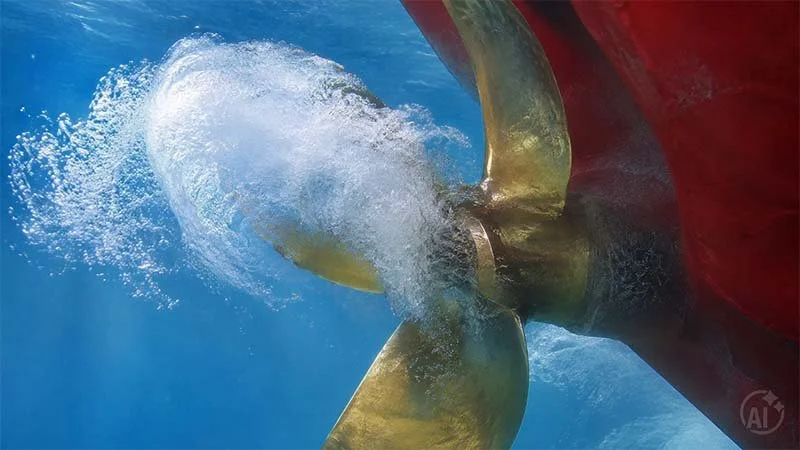
Ships Propellers are often damaged by cavitation - at Envorem, we harness that power
For most engineers, cavitation is something to avoid. It destroys ship propellers, damages pump impellers and erodes concrete dam spillways. At Envorem, however, the same physical phenomenon is being harnessed to solve one of the oil industry's most persistent waste problems.
Cavitation – A force engineers usually design against
Cavitation happens when a liquid moves rapidly from a region of high pressure into one of low pressure, dropping below its vapour pressure. Vast numbers of microscopic vapour bubbles form and then collapse almost instantly, releasing intense bursts of energy across tiny distances.
On a ship's propeller, those collapsing bubbles hammer the metal thousands of times a second. Over time they carve pits into bronze and steel, which is why naval architects spend so much effort designing propellers that avoid cavitation altogether.
“Hydrodynamic cavitation is something engineers usually fear,” says Mike Levey, Envorem's co-founder and Technical Director, a physicist who trained at Imperial College London. “It has been seen to severely damage propellers on ships, pump impellers, valves, pipework and concrete dam spillways. But when it is correctly harnessed, that same destructive energy has incredibly useful applications.” Cavitation can also be put to work commercially. Mike explains how in his interview, Environmental Clean-Up Can Be Profitable
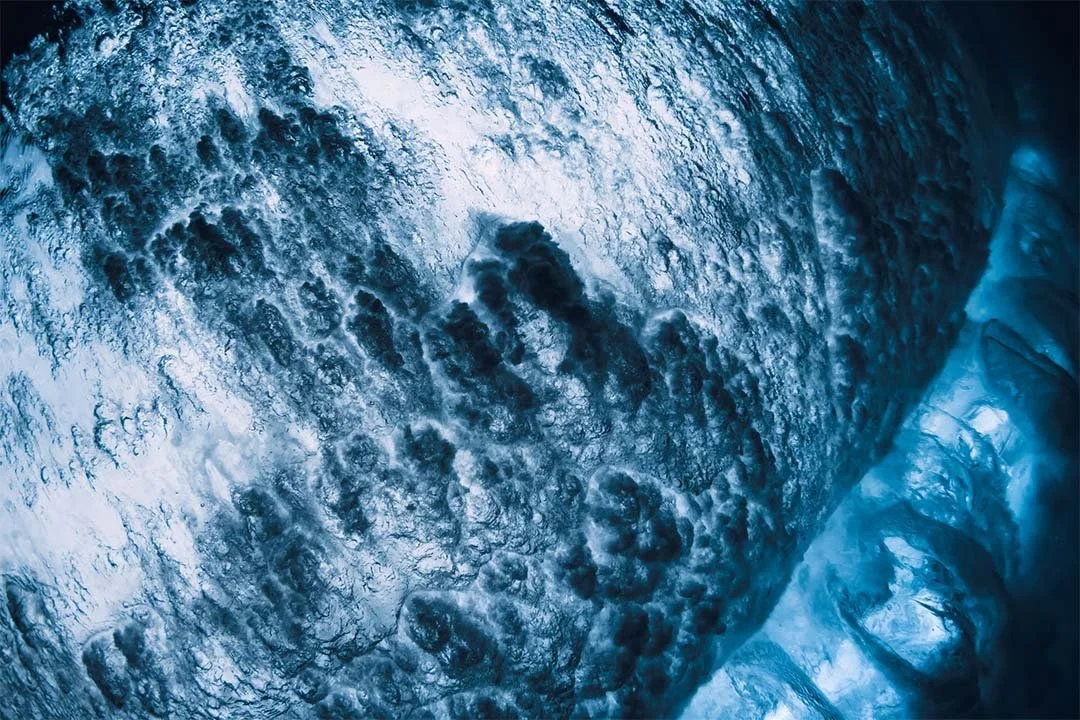
Cavitation bubbles
Turning a problem into a tool
The problem Envorem set out to solve is oily sludge, the waste that accumulates wherever oil is produced. The world's legacy deposits are estimated at around 1.8 billion tonnes, much of it sitting in open lagoons. Conventional answers are landfill or incineration, and neither deals with the waste well.
Envorem's system uses controlled cavitation in water to do what those collapsing bubbles do to a propeller, only this time the target is sludge.
“Our technology uses a little known natural phenomenon in water to produce very powerful bubbles,” says Mark Batt-Rawden, Envorem's Managing Director and the designer of the system. “These collapse with considerable force, tearing sludges apart, cleaning the solids and separating the entrained oil, all without generating emissions. It sounds simple but the technology is highly complex, with several processing stages.”
The energy that destroys a propeller is uncontrolled and lands where it isn't wanted. Inside the Envorem system it is focused and repeatable. The collapsing bubbles strip oil from sand and sediment particles at a microscopic level, something heat and chemicals struggle to achieve without creating new problems of their own.
“The difference is control,” Mark adds. “A propeller suffers cavitation by accident. We generate it deliberately, at the intensity we choose, exactly where we need it. That is the whole discipline of this engineering.”
The technology and its origins in a phenomenon engineers normally design against are explored further in ECO Magazine. Read Envorem develops innovative Greentech to clean oily sludges.
The surprising result
For a process built on destructive force, what comes out is remarkably intact. The recovered crude oil is chemically unchanged and suitable for refining. The cleaned sediments are largely fit to return to the environment and the water is recycled within the process itself. The only process chemical is water.
Mike Bennett, Envorem's Chief Operations Engineer, spent his career in the oil industry with Shell, BP and Total before joining the company. “The technology we have is astounding,” he says. “With the help of the University of Brighton we have seen our cavitation clouds in simulations. Nobody else has our technology. The alternative is incineration, which is horrible.”
For John Grover, Envorem's Middle East Director, the engineering story only matters if the numbers stack up. “One of the failings in green business is making vague claims without evidence,” he says. “For Envorem this is easy. We can demonstrate direct emissions savings against incineration, which just burns the oil out of the waste and converts it to greenhouse gases. We clean up your waste, we give you the oil back, we do it cheaper, with less environmental impact, and we do it faster.”
More than a century after engineers first identified cavitation as a cause of equipment damage, Envorem is applying the same physical phenomenon in a controlled way to recover oil, clean contaminated solids and reduce waste. It demonstrates how established engineering principles can be redirected to solve modern environmental challenges.